Showing posts with label Brain Food. Show all posts

Saturday, February 20, 2010

Simplicity = Complexity

Simplicity is the ultimate sophistication.”  Leonardo da Vinci 
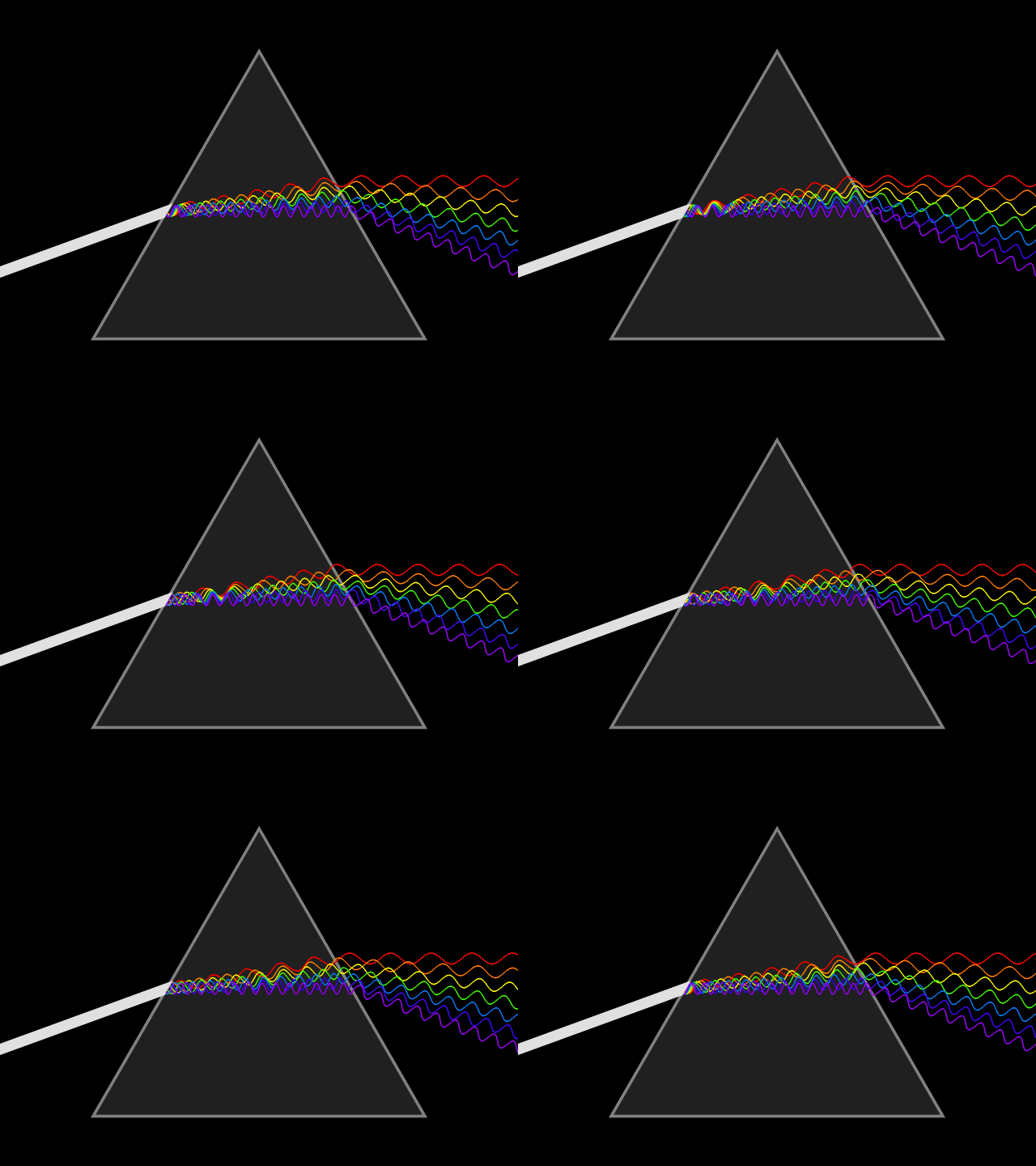
Simplicity equals complexity because simpler clarity of expression opens something up to a vast amount more associations and connections.
The simpler, purer the prism is, the broader the spectrum that shows through it.


P.S. Ever heard of a grism? Me neith.

Sunday, January 31, 2010

Why do we comprehend anything as "all at once" ?

Scientists, testing the reason we sometimes perceive the rotation of a tire (on a car, when its spinning at a certain speed) as going the opposite direction - known as the Wagon-wheel effect - found that "The continuity of our perception is an illusion...The experiment even put a number on our visual frame rate - around 13 frames per second." As there was a specific visual frame rate , the implication was...
...that there is not a single "film roll" in the brain, but many separate streams, each recording a separate piece of information. [In a separate experiment to further examine this] VanRullen examined another neural function, called near-threshold luminance detection. He exposed his subjects to flashes of light barely bright enough to see, and found that the likelihood of them noticing the light depended on the phase of another wave in the front of the brain, which rises and falls about 7 times per second. It turned out that subjects were more likely to detect the flash when the wave was near its trough, and miss it when the wave was near its peak.

So it seems that each separate neural process that governs our perception might be recorded in its own stream of discrete frames. But how might all these streams fit together to give us a consistent picture of the world? Ernst Pöppel, a neuroscientist at the Ludwig Maximilian University in Munich, Germany, suggests all of the separate snapshots from the senses may feed into blocks of information in a higher processing stream. He calls these the "building blocks of consciousness" and reckons they underlie our perception of time (Philosophical Transactions of the Royal Society B, vol 364, p 1887).

It's an appealing idea, since patching together a chronological order of events hitting our senses is no mean feat. Sounds tend to be processed faster than images, so without some sort of grouping system we might, say, hear a vase smashing before we see it happen. Pöppel's building blocks of consciousness would neatly solve this problem: if two events fall into the same building block, they are perceived as simultaneous; if they fall into consecutive buildings blocks, they seem successive. "Perception cannot be continuous because of [the limits of] neural processing," says Pöppel. "A space of 30 to 50 milliseconds is necessary to bring together in one time-window the distributed activity in the neural system."
Pöppel's theory is an interesting one to tie together the discoveries about our processing. Before we had the capability to examine these sorts of questions of cognition (the past few decades?), the historical language used to explore them had been more purely theoretical and philosophical. This shift complicates the responses one can make to a theory such as Pöppel's.

 
Flash-Flooded Desert in Sinai, Egypt - Click image for LARGE - source: This Fab Trek

Friday, December 18, 2009

"Man Cave" Found in Boston

A secret nook was uncovered on December 14th, 2009 at a Boston (Somerville) Commuter Rail station:
An investigation led to a strange discovery hidden in a storage room: a makeshift entertainment center, including three televisions, two DVD players, one VHS player, surround-sound speakers, a video game system, and DVDs, some of them pornographic, a transportation official said yesterday.

The equipment, slyly camouflaged within the commuter rail’s massive Somerville maintenance facility, even had an illegal cable television connection that came through a 1,000-foot cable...“This was very much concealed among maintenance parts and equipment,’’ said the official.
An anomalous event? Perhaps NOT...From the August 3rd, 2009 New Yorker:
Which brings us to Albany, site of the great political tragicomedy of the summer, and last week’s news that state police had raided an illicit rec room in the Capitol complex. The Inspector General’s office, in a press release announcing the discovery, called it a “man cave,” conjuring up images of a dimly lit basement with stained upholstery and an overabundance of electronics. Using tarps, a couple of janitorial workers on the night shift had cordoned off a corner of a state-owned parking garage, which was stocked with sofas, fridges, a TV, and the latest copy of Cannabis Culture. There, while on the clock, they allegedly watched DVDs of “M*A*S*H,” rolled joints, and napped.
 Both Man Caves eerily similar. How to account for their existence? The New Yorker article also included one gentleman's postulation:
The architect Andrés Duany identified a budding crisis in American life: the decline of “male space,” which he defined as zones “where the enthusiasms of Super Bowl day are unchecked year-round,” and where “the men are not factually corrected when they exaggerate.” The den, with its knotty-pine panelling and mounted moose heads, used to suffice, before it was subjected to a cultural makeover and emerged as the “family room,” relegating Dad to the garage.
 Is there a crisis of lost #manspace in modern America? -or just the North-East of it?

Monday, September 28, 2009

Modernity: Things are Riskier, But Artists & Creators Have More Opportunity


The Modern Age, along with its perks,  increase the riskiness of things (the global financial crisis a "great" case study) - using Nassim Taleb terminology, modernity is increasing our exposure to "Extremistan." From Niall Ferguson's review of Taleb's The Black Swan:
Perhaps the most provocative of all Taleb's many provocations is his hypothesis that, as a result of globalisation and the speed of electronic communications, the world is becoming more like Extremistan and less like Mediocristan.

Yes, the integration of international markets seems to reduce economic volatility. But by magnifying the effects of herd-like behaviour (another of our evolved traits), it also increases the tendency for winners to take all - the Harry Potter phenom-enon - and for disasters, when they strike, to be comparably huge. Just as there will be fewer but bigger bestsellers, Taleb argues, so there may also be "fewer but bigger crises" in the realms of finance and geopolitics.
Mediocristan is where failures or successes have a smaller impact. In Extremistan, the impact is huge (often global). More and more of the world is becoming like Extremistan - "winner-takes-all" - the more interconnected and interdependent we become.

The internet is one of the defining offspring of Modernity as well as a major reason for this global interconnectedness. Though, as Kevin Kelly's concept of 1,000 True Fans shows, the Internet can also serve as a leveling tool.

Artistic fields like film, visual art, music are subject to Extremistan-like tendencies: winner-takes-all tendency, high degrees of randomness as far as which participants in these fields will achieve "Superstar" level (the rare but dominating leaders of the field). since the distribution isn't even but extreme, high success is rare.

"1,000 True Fans"
, on the other hand:


Other than aim for a blockbuster hit, what can an artist do to escape the long tail? One solution is to find 1,000 True Fans. While some artists have discovered this path without calling it that, I think it is worth trying to formalize. The gist of 1,000 True Fans can be stated simply:

A creator, such as an artist, musician, photographer, craftsperson, performer, animator, designer, videomaker, or author - in other words, anyone producing works of art - needs to acquire only 1,000 True Fans to make a living.

A True Fan is defined as someone who will purchase anything and everything you produce. They will buy the super deluxe re-issued hi-res box set of your stuff even though they have the low-res version. They have a Google Alert set for your name. They come to your openings. They have you sign their copies. They can't wait till you issue your next work. They are true fans....Let's peg that per diem each True Fan spends at $100 per year. If you have 1,000 fans that sums up to $100,000 per year, which minus some modest expenses, is a living for most folks.

One thousand is a feasible number. You could count to 1,000. If you added one fan a day, it would take only three years...The technologies of connection and small-time manufacturing make this circle possible...You don't need a million fans to justify producing something new. A mere one thousand is sufficient.

But the point of this strategy is to say that you don't need a hit to survive. You don't need to aim for the short head of best-sellerdom to escape the long tail. There is a place in the middle, that is not very far away from the tail, where you can at least make a living. That mid-way haven is called 1,000 True Fans. It is an alternate destination for an artist to aim for.
The opportunity for escape - to an alternate path of success for a creator - is something the internet is beginning to usher in (I don't believe the 1,000 True Fans model has yet reached  near its full potential).

My previous post on the internet highlights another leveling factor. Modernity brought the means of mass communication (1984-style), but the web allows the option of less "clumping" around a few, most prominent voices. Experts (and varied opinions) are easier to find - hopefully also lessening our exposure to Extremistan (in the form of singular, top-down instead of bottom-up guidance).
More on this point in a later post.


(Click for larger - source: Flickr)
"Clumping." You know, like an efficient kitty litter.

Thursday, September 17, 2009

Berlusconi and a Blurb

A heads-up to historians out there wanting to get ahead of the game:

"I sincerely believe I am by far the best prime minister Italy has had in its 150 year history (since unification in 1861)," Berlusconi said in televised news conference in Sardinia with Spanish Prime Minister Jose Luis Rodriguez Zapatero.
---------------------------
(Unrelated) blurb:
"A tailor at work resembles the poet cutting, trimming, and stitching his verse. The needle is the sudden penetration of insight, while the flexible thread, assuring continuity and shape, is dragged in the rear as a secondary process. The result is “my misshapen son”: Art-making by men is an appropriation of female fertility. The end product, like Frankenstein’s “monster” with his stitched-up face, may seem ugly or distorted (in an avant-garde era). But the artwork is the artist’s true posterity, a child of the intellect rather than the body—a distinction made by Plato. "
- Camille Paglia
Thanks to Foreign Policy Passport blog for photo

Saturday, September 5, 2009

What the Internet Facilitaties: Expertise


Worthwhile excerpt from an article on a presentation by
Chris Anderson (editor of Wired Magazine) to the Smithsonian on how best to confront and utilize the digital age:

Anderson:"If you're given infinite choice and the tools to help you find stuff, then we will start to diversify our choice, and define our communities of interest," he told the audience. "It often turns out that the stuff we love the most is the stuff that's not the blockbuster. The stuff that we all like collectively -- the Super Bowl -- are things we don't feel as passionately about. Less popular things are actually more meaningful to us as individuals."

Anderson's fetish, for example, is Lego robots. In what might be a mammoth understatement, he revealed that there is no place for this interest in his magazine. But online, he has found a community of people like him.

..."The Web is messy, and in that messiness comes something new and interesting and really rich," he said. "The strikethrough is the canonical symbol of the Web. It says, 'We blew it, but we are leaving that mistake out there. We're not perfect, but we get better over time.' "

The problem is, "the best curators of any given artifact do not work here, and you do not know them," Anderson told the Smithsonian thought leaders. "Not only that, but you can't find them. They can find you, but you can't find them. The only way to find them is to put stuff out
there and let them reveal themselves as being an expert."

Take something like, oh, everything the Smithsonian's got on 1950s Cold War aircraft. Put it out there, Anderson suggested, and say, "If you know something about this, tell us." Focus on the those who sound like they have phenomenal expertise, and invest your time and effort into training these volunteers how to curate. "I'll bet that they would be thrilled, and that they would pay their own money to be given the privilege of seeing this stuff up close. It would be their responsibility to do a good job" in authenticating it and explaining it. "It would be the best free labor that you can imagine."
As Anderson points out, the "Passionate Expert" on a subject is not necessarily the most visible or easiest to find. With the connectivity that's now facilitated by the internet, that platform allows an opportunity for others interested in a topic to find their way into communities (such as the Smithsonian archive) instead of the Smithsonian having to necessarily seek them out.
 

Not only are 'expert types' easier to find, contacting and working with them is simpler too. Expert Example: Col. Pat Lang - Green Beret, Vietnam Vet, Middle East Intelligence Specialist. His knowledge and insight on M. E. topics (and of course, viewpoint) is openly available to those interested.

PhotobucketNorth America's City-to-City Internet Connections via Chris Harrison

Wednesday, August 26, 2009

Social Deviants are The Future?

I lifted the following from a Amazon commenter (Jeffrey Miller)'s book review.

Freedom of speech and protection of a counterculture are more than just abstract features of a Western liberal morality. Freedom of speech and protection of "deviants" comprise essential economic infrastructure in the twenty-first century. As we move into an Information Age, societies that offer strong protection of freedom of speech and individual expression will trump those Confucian societies that emphasize obedience and silent submission to authority. As unlikely a winner as oft-benighted India may seem to be, I would still put good money on India and the individualistic U.S., in collaboration with the European Union, as the future leaders of the non-local sphere of Information and Cyberspace, leaving the Confucian societies not yet visited by glasnost far behind. Freedom of information should be treated by Khanna as one of the most important traits of an economic superpower, far more important than good roads, canals, and oil rigs. Confucianism, as it exists today, is a mimicry engine producing only commodities; free societies such as India have the potential to become creativity engines, producing entirely new economic niches.
Economies open to harnessing the (positive) Black Swans, as Taleb would say.
Unless we are driven into a new Dark Age by war or resource disasters, the relentless Information Age will reward societies with strong creative classes (Richard Florida's term); reward societies with a protected counterculture and bohemia; and will punish societies ruled by conformity and fear of "deviance"; will punish societies without their equivalent of Mad Magazine; will punish societies that imprison dissidents. Until Chinese glasnost emerges, the United States, Europe and India will rule cyberspace, and hence the future.

Miller's points are compelling. Global access to a global pool of knowledge (and, so far, an unlimited amount of output able to be put in to it) -- the effects of this have yet to be really sifted out to their long term implications.

------------------------

Related is this Nature article entitled "Conformists may kill civilizations."
"Whitehead and Richerson's models highlight the perils of cultural conformism in red-noise environments, particularly when populations are small, but also show how other styles of learning can mitigate the problems. For instance, 'prestige bias' means that people only copy successful role models, rather than simply imitating what everyone else is doing.
"Societies should promote individual learning and innovation over cultural conformity, and the models for social learning should be individuals who have demonstrated that they understand how to live with the current environmental trends," says Whitehead."


Photobucket
clik for bigger- source: Flickr

PS- Is "entitled" more pretentious than "titled"? hopefully

Tuesday, August 18, 2009

Finding a Character, Status, and Comedic Acting on Film

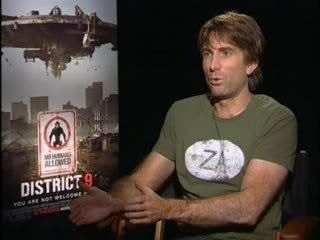
1. Excerpt from interview with the lead of District 9, Sharto Copley, discussing coming to acting after working in other fields:


AVC: So do you know what the immediate next step is in your life?

SC: No. It’s the first time in my life… Before, if you’d asked me that, there was always a definite master plan and sub-plan and plan linking into that plan. So I’m just really trying to live differently for a bit. It’s a very different world.
The acting world is a humbling experience, I find. It very much, for me, it shut me up. This whole thing. It was like, “Well, you think you can be a hotshot because you started this company and you started a television channel when you were 24, or whatever.” And it’s really… [Pauses.] The process of finding a character—stripping everything off, all those things you have to protect yourself, that you think are your clever things, was in a sense mirrored in my work life. I let go to see what’s actually out there, or what I’m meant to really do, if there is such a thing. And certainly this experience leads me to feel like maybe it is."
Copley speaks to the psychology of acting; him changing fields in his life matched how he was forced to "strip away" what he had been holding on to as defining himself.

----------------------------
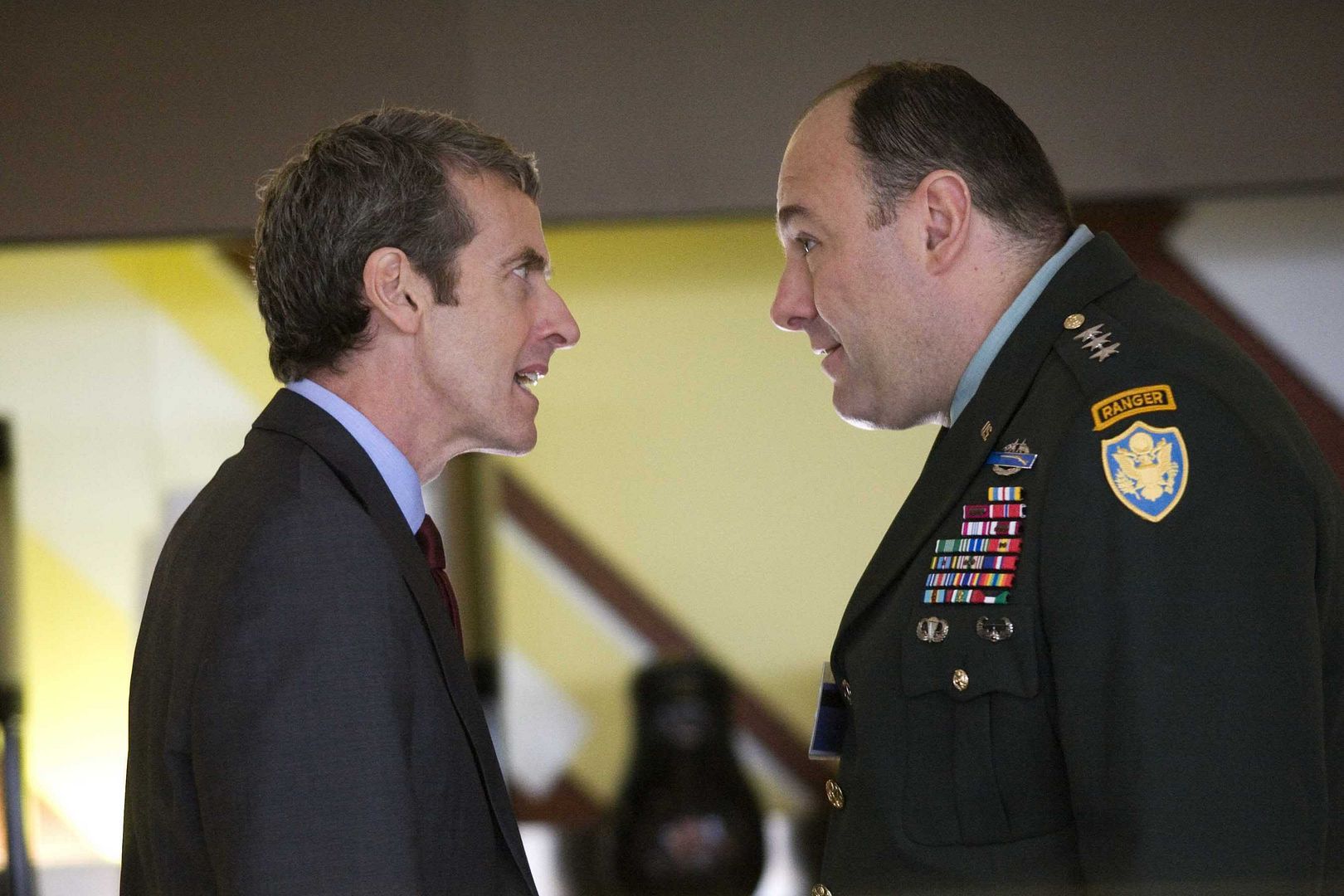
2. Excerpt from interview with Peter Capaldi, regarding his character (Malcolm) from the BBC Show The Thick of It and now the film In The Loop:


AVC: On The Thick Of It, Malcolm is a fire-breathing Scot in a world of posh Englishmen whom he can generally run right over, but the Americans in In The Loop give back as good as they get. How did it change things to have Malcolm taking on enemies in his weight class?

PC: I think for me, that was a wonderful thing. Malcolm is largely the top dog on the TV show in terms of power. So to have people who were superior to him, and cleverer than him, and darker, was great, because then it gives you somewhere to go. So for me, that was a good development. I’d be happy to see more of that. It makes it more interesting. There’s only so long that you can go on screaming and shouting and swearing. There’s a sense of diminishing returns about that.
But if you actually have to engage with somebody who’s superior to you and actually battle with them, struggle with them, I think it’s more interesting, and funnier for the audience."
Peter's intuition of what's "more interesting, and funnier for the audience" falls in line Keith Johnstone's framing of the concept of Status for performers. (The goal of the exploration of this being keeping an audience interested.)

Snipped from a summary of Impro's chapter on Status:

"When played in this way, conflict transpires on an almost invisible plane which the audience will unconsciously pick up: the most mundane gestures and casual behaviors -- where to sit, who speaks first, what the choice for dinner will be, etc. -- become sites of struggle in virtually imperceptible ways. Every sound and posture implies a status, and recognizing this leads to a change in one's worldview.
A great deal of the comedy or tension [is derived] from the tiny ways that people vie for power by trying to raise their own status or lower the status of others in an implicit rather than explicit way."
As Peter says, Malcolm's character is generally higher status than the others on the TV show. To have him engaging those equal or near equivalent to his status in the film can be more interesting.

----------------------------
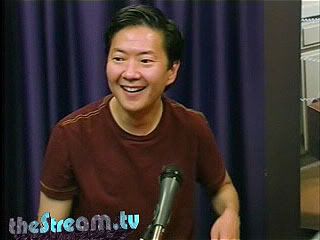
3. Excerpt from interview of Ken Jeong, comedian/actor (from Knocked Up, The Hangover, The Goods), regarding upping the quality of the comedy work being put on film (and what he's learning from working with some "pros"):


AVC: What kind of subtle moves?

KJ: Just reaction glances. Both of those guys [Paul Rudd, Jeremy Piven], I think alot of comedic actors, on their close-up they can deliver. But when it comes to reacting to other people being funny, that’s work in itself. I hate to sound so Comedy Theory 101—I know it’s sounding really boring—but for me, Rudd in Role Models, when he reacts to things that Seann William Scott does, he does certain things that help stretch the scene a little more, and it makes Seann look better. I felt like Piven would do the same thing. He would make all of us look better by his reactions. It’s a very subtle thing, but when the movie comes for a close-up, and they show that quick shot, it makes it funnier. Because we’re trying to dunk and do fancy moves to the basket, but what you really need is a point guard who can direct the flow. I really realize the more movies I do just how important—it’s so cliché when people say it, because everybody says it nowadays—but it’s so important to keep it grounded. I totally understand what that means.
"Keeping it grounded" helps signal to the audience that whatever happened, just happened in the real world - the reaction shots help put to the screen the incredulity the audience is feeling at that moment. The reaction shot can be a tension releaser as well - letting the audience can enjoy the previous moment through the reaction shot.
--
Thanks to A.V. Club for these thorough interviews! Picture sources here, here, and here

Tuesday, July 28, 2009

What Cheek!

The modern atheist thinks he knows that God is dead; what he doesn't know is that, unconsciously, he continues to believe in God. What characterizes modernity is no longer the standard figure of the believer who secretly harbors intimate doubts about his belief and engages in transgressive fantasies; today, we have, on the contrary, a subject who presents himself as a tolerant hedonist dedicated to the pursuit of happiness, and whose unconscious is the site of prohibitions: what is repressed are not illicit desires or pleasures, but prohibitions themselves. "If God doesn't exist, then everything is prohibited" means that the more you perceive yourself as an atheist, the more your unconscious is dominated by prohibitions which sabotage your enjoyment. (One should not forget to supplement this thesis with its opposite: if God exists, then everything is permitted - is this not the most succinct definition of the religious fundamentalist's predicament? For him, God fully exists, he perceives himself as His instrument, which is why he can do whatever he wants, his acts are in advance redeemed, since they express the divine will...)
- Slavoj Žižek

Friday, July 3, 2009

"The Girl Who Doesn't Age"

Doctors Baffled, Intrigued By Girl Who Doesn't Age

Brooke hasn't aged in the conventional sense. Dr. Richard Walker of the University of South Florida College of Medicine, in Tampa, says Brooke's body is not developing as a coordinated unit, but as independent parts that are out of sync. She has never been diagnosed with any known genetic syndrome or chromosomal abnormality that would help explain why.

In a recent paper for the journal "Mechanisms of Ageing and Development," Walker and his co-authors, who include Pakula and All Children's Hospital (St. Petersburg, Fla.) geneticist Maxine Sutcliffe chronicled
a baffling range of inconsistencies in Brooke's aging process. She still has baby teeth at 16, for instance. And her bone age is estimated to be more like 10 years old.

"There've been very minimal changes in Brooke's brain," Walker said. "Various parts of her body, rather than all being at the same stage, seem to be disconnected."


Kinda messes with our perception of the passage of time, as far as what one may think would be the sort of irreversible impact this passage would have on the body. Brooke's seemingly unaffected...

In her first six years, Brooke went through a series of medical emergencies from which she recovered, often without explanation. She survived surgery for seven perforated stomach ulcers. She suffered a brain seizure followed by what was diagnosed as a stroke that weeks later left no apparent damage.
At 4, she fell into a lethargy that caused her to sleep for 14 days. Then, doctors diagnosed a brain tumor, and the Greenbergs bought a casket for her.

"We were preparing for our child to die," Howard Greenberg said. "We were saying goodbye. And, then, we got a call that there was some change; that Brooke had opened her eyes and she was fine. There was no tumor. She overcomes every obstacle that is thrown her way."
...The visual evidence of that unpredictable future is always there in the family pictures -- photographs in which everyone but Brooke is aging.

In the long term, the idea that the aging process might somehow be manipulated raises serious questions about what human beings might do with that knowledge.

"Clearly, that's the science fiction aspect of it," said Walker, describing the social and ethical dilemmas that would arise. "We can't have continued reproduction and people who don't age."

One possible reason to slow the aging process, Walker suggested, would be to allow astronauts to travel in space for long periods of time. "But right now, it's only conjecture," he said.

Saturday, June 20, 2009

re: Connectivity/Synthesizing...

Kevin Kelly:
"Unified knowledge is constructed by the mechanics of duplication, printing, postal networks, libraries, indexing, catalogs, citations, tagging, cross-referencing, bibliographies, keyword search, annotation, peer-review, and hyperlinking...Knowledge is thus a network phenomenon, with each fact a node. We say knowledge increases not only when the number of facts increases, but more so when the number and strength of relationships between facts increases. It is the relatedness that gives knowledge its power."

As a follow up to this post (about the connective nature of knowledge/ideas)

Wednesday, May 27, 2009

God Talk (part 2)

God Talk, Part 2 - Stanley Fish builds on his previous post and responds to commenters.

"By the same analysis, simple reporting is never simple and common observation is an achievement of history and tradition, not the result of just having eyes. And while there surely are facts, there are no facts (at least not ones we as human beings have access to) that simply declare themselves to the chainless minds Hitchens promises us if we will only cast aside the blinders of religion.

Indeed, there are no chainless minds, and it’s a good thing, too. A chainless mind would be a mind not hostage to or fettered by any pre-conceptions, a mind that was free to go its own way. But how could you go any way if you are not anywhere, if you are not planted in some restricted location in relation to which the directions “here,” “there” and “elsewhere” have a sense?"


(click for large - taken at St. Francis Cathedral in Santa Fe, NM)

Monday, May 11, 2009

God Talk: Modern Creeds Can't "Replace" Religion

Good write-up on belief in the modern era -

God Talk, Stanley Fish on Terry Eagleton's new book, "Reason, Faith, and Revolution."

"...the basis for what Eagleton calls “the rejection of religion on the cheap” by contrasting its unsupported (except by faith) assertions with the scientifically grounded assertions of atheism collapses; and we are where we always were, confronted with a choice between a flawed but aspiring religious faith or a spectacularly hubristic faith in the power of unaided reason and a progress that has no content but, like the capitalism it reflects and extends, just makes its valueless way into every nook and cranny."

Thursday, May 7, 2009

Hyper-Connectivity

(except from interview in Scientific American, with Daniel Tammet, an autistic savant)

LEHRER: You advocate a theory of creativity defined by a cognitive property you call "hyper-connectivity." Could you explain?

TAMMET: I am unusually creative—from visualizing numerical landscapes composed of random strings of digits to the invention of my own words and concepts in numerous languages. Where does this creativity come from?


My brain has developed a little differently from most other people’s. Aside from my high-functioning autism, I also suffered from epileptic seizures as a young child. In my book, I propose a link between my brain’s functioning and my creative abilities based on the property of ‘hyper-connectivity’.


In most people, the brain’s major functions are performed separately and not allowed to interfere with one another. Scientists have found that in some brain disorders however, including autism and epilepsy, cross-communication can occur between normally distinct brain regions. My theory is that rare forms of creative imagination are the result of an extraordinary convergence of normally disconnected thoughts, memories, feelings and ideas. Indeed, such “hyper-connectivity” within the brain may well lie at the heart of all forms of exceptional creativity.

Compelling idea - and points to, I believe, the concept that being able to synthesize ideas is more important than being the holder of certain data/knowledge. It could be argued that it's always been that way, but I believe the 'modern age,' UNDT DAS INTERNET, has decreased the value of knowledge (in the form of statistics and details, with so much it becoming easily accessible). If one considers knowledge as coming most importantly in this form, then it is easier to feel that "most everything's been figured out." A perspective change to looking at where knowledge/ideas (disparate or not) can be synthesized to either further clarify the original idea or form a new idea opens the drapes wide open on the vastness of things yet to be conceived, tried, tested, synthesized.

addendum: Synthesis does require understanding - which does require the use of data/statistics to be examined, understood, and passed through to see what they are representing.

Wednesday, May 6, 2009

Decisionless Moments

I was involved in 2 decisionless moments today (both with groups) got me thinkin. The first was in a lunch that was being thrown, at work, for a coworker who was getting married this weekend. There were several minutes of sitting in a group, looking at the heaping pile of food on the table. People were hungry, people were able to (socially acceptably) eat, but most noticeably was that everyone was aware of the potential action that could happen at any moment, we were all waiting for something to give and we can start eating. Eventually someone said something about digging in and then the eating started (rapidly).

Other time was driving back to work at the end of lunch- at a busy 4-way stop - myself (i'm a car) and two other cars pulled into the intersection, each of us stopping evenly at the same the distance from each other --- forming a near-perfect square of space from each other (a square? with three cars, brett?). After the briefest of moments i continued straight through the square and out the intersection.

All anybody wanted in either of these situations was somebody to make decision. None of the drivers (the other two cars had drivers, i'm a car, remember) had particularly strong feelings about what the decision was, just for that moment, that pause, we (they, --still a car here) wanted SOMEBODY to make a decision so that we could continue the pattern/learned activity that we had been doing/ knew how to do - driving, in this case [<-said british="" detective="" font="" in="" voice="">

At the lunch, nobody cared enough to decide to say something about digging in (until someone did).

Starting from square 1: When it comes to not-everyday/less intuitive decisions, its only when we care about something enough that we commit ourselves to making a deliberate decision about it; only when our I-give-an-shit level crosses a certain threshold, let's say.

Both of these aimless, decisionless situations i was in today made me wonder how much time we spend waiting for a decision to be made, rather than waiting to make a decision ourselves. i think it's easier to conceive of ourselves individually, with high awareness (of "why" we made that choice) when it comes to the decisions that we make and the things we do day in day out. The situations I was in gave a sort of look-behind-the-curtain at groups of individuals (including myself) who were content to - preferred to? -be buffeted around by the decisions of others or the group. It was when a decision of significance was having to be made that tensions raised/awarenesses increased - once someone (anyone!) made A decision, we knew what to do then: OK, now can drive || OK, now can eat.
If i had to throw a hula-hoop in the dark i'd say there's something to this as far as our actual tendencies when interacting with each other, compared to the idea of the rational, unaffected, individual decision-maker.

---

as i've written this post i've doubted more the whole concept, the whole idea, but i had started the writing of it so had to finish it. also felt better about it towards the end

Tuesday, May 5, 2009

Truffles

Truffles Lead to Food Abuse - "Once people felt their goals were met, they tended to reverse their behaviors."