
Like Keith Johnstone's astoundingly good Impro, these quotes are aimed at improvisers, but they resonate into comedy, performance, and everyday life. Many of the below tie into Keith's modus operandi of allowing our instincts to lead the interaction - not trying - as outlined here
1. "When things happen that seem truthful, observers project themselves into the characters..."
2. "Don't come on to be funny - come on to solve problems."
3. "If you don't have to kick the students out after school, something is wrong."
4. "The best laughs are on the recognition of truth. "
5. "You don't have to have 'a good idea' - just 'an alter-the-relationship'."
6. "In a scene [where the improvisers must interact] without the letter S, the audience is waiting for you to lose - so they can laugh at you. Don't try to win."
7. "Best side-coaching for improvisers in a scene? 'Do it.' Some actors don't want to move into the future."
Showing posts with label Keith Johnstone. Show all posts
Showing posts with label Keith Johnstone. Show all posts
Saturday, February 12, 2011


Sunday, January 30, 2011
Disgusting Bliss: Iannucci's Comedy Insight

I've been reading Disgusting Bliss, a biography of Chris Morris. Morris (subject of previous blog posts here and here) began his collaboration with Armando Iannucci on the surreal current affairs news-parody On The Hour, a radio show which ran from '91-'92. While Morris was the team's most significant and unpredictable creative spark, it was Iannucci who understood and was able to convey the shape of the show and its cutting edge humor:
'[Iannucci] said, "Look, there's a way of performing comedy where the jokes are very much told and [instead] I want you to bury the humour. I want you to do funny voices but I don't want them to be too funny. I want you to improvise funny things but don't be looking for the humour, just trust that it will come."On The Hour won the British Comedy Award for best radio comedy. Iannucci would go on to produce & write for the multi-award winning TV programs The Day Today and The Thick of It, and the Oscar-nominated film In The Loop.
Iannucci's angle on comedy resonates with the idea of not putting out extra, unnecessary effort for humor's sake- Do less, as Johnstone might say. I believe this angle also sparked the loyalty and passion that fans of these programs have. By not advertising the fact that they were "DOING HUMOR", the programs trusted that those watching would make the necessary cognitive leap to understand that the off-kilter world created was an intentional one.
It also seems - to me - that when something humorous asks more of the person who is processing it (for example, a punchline with two twists in it instead of one), -assuming it is not asking too much of the individual- the additional processing done makes the moment that things 'click' even more enjoyable. They've internalized and taken some ownership over the bit, by way of having to mentally chew it over, rather than being spoon-fed something predictable. Not that the 'predictable' = 'bad,' but that earned complexity can heighten a moment.
Tuesday, September 15, 2009
How to Improvise: Be Obvious
There are two things to do to improvise: generate, and justify. Both of these things are instinctual (i.e., our brain can do this for us without us forcing it to do so). First, the improvised item must be generated ("improvised"), and then justified within the context of the scene/environment. Here's how to do both (though you already know how to?):
As to the generating, (and the expectation of having to create something "original"): Keith Johnstone writes in Impro:
---
If that's the Generating, then where does its counterpart Justifying come in?
We'll call this instinct The Justifier, which responds to the question "why" of "why do i have this thing/how do i justify it's presence?" This is instinctual in a scene because it's the same one we use in everyday life to situate ourselves.*
This Justifying instinct can be nearly as responsive and usable as the generating, particularly following Johnstone's creed of "Be Obvious! Don't try to be clever" -
if in a scene you partner asks why you're holding takeout, the "obvious" answer is because you just got from a restaurant. No clever "an alien from Saturn gave me this doggie bag, its got soup recipes in it."
'The obvious' serves as a much stabler, stronger platform to build the scene on. The takeout's presence could lead to revelation of having eaten with someone, which could cause tension upon returning home, which could lead to something all the more dramatic. An interesting scene has been created with minimal stress or 'i have to be clever!' pressure on the part of the performers.
-
That is all that is needed to improvise - generating, and justifying. Johnstone also recommends the use of 'reincorporation' - using what's already been introduced in the scene - tobuild a story and find an ending. This, combined with Johnstone's concept of Status, mentioned in this previous post, are additional concepts that can be plugged into the base that's created by the generating and the justifying. The fact that improvising is simply what our brain does on its own, means that anyone can improvise. It's not about your funniness, cleverness, or brainpower - all it takes is awareness and using what you have already.
*The Justifier is, I believe, our innate pattern-searching and pattern-recognition mental instincts. "Why would i have this?" is searching for a pattern, and Johnstone's 'Be Obvious' injunction reminds one to be comfortable picking the obvious pattern.
As to the generating, (and the expectation of having to create something "original"): Keith Johnstone writes in Impro:
"The improviser has to realize that the more obvious he is, the more original he appears. I constantly point out how much the audience like someone who is direct, and how they always laugh with pleasure at a really 'obvious' idea. Ordinary people asked to improvise will search for some 'original' idea because they want to be thought clever...The mind can immediately generate a response for what something (imaginary) is - it is more one's desire to appear imaginative (or the fear that an immediate, subconscious response will negatively reflect on oneself) that slows its expression. Our imagination, then, (*without prompting*) is a near-infinite generator of what something could be. Johnstone again:
'What's for supper?' a bad improviser will desperately try to think up something original...he'll finally drag up some idea like 'fried mermaid.' If he'd just said 'fish' the audience would have been delighted. No two people are exactly alike, and the more obvious an improviser is, the more himself he appears."
"...I explain that I'm not interested in what they did, but how their minds worked. I say that either they can put their hand out, and see what it closes on; or else they can think first, deciding what they'll pick up, and then do the mime [of the object]. If they're worried about failing, then they'll have to think first; if they're being playful, then they can allow their hand to make its own decision."Johnstone goes on to show this at work - having a student repeatedly take something from an imaginary box, continually changing the context so they can't plan what (potentially 'clever thing') to take next. J-stones:
"If I make people produce object after object, then very likely they'll stop bothering to think first, and just swing along being mildly interested in what their hands select. Here's a sequence that was filmed...I said:Note this student is not planning these things, but they are being supplied instinctually. I've done this same exercise as a director and the results are the same - eventually the mind supplies its own items without them being consciously planned or strictly supervised.
Keith: 'Put your hand into an imaginary box. What do you take out?'
'A cricket ball.'
'Take something else out.'
'Another cricket ball.'
'Unscrew it. What's inside?'
'A medallion.'
'What's written on it?'
'Christmas 1948.'
'Put both hands in. What have you got?'
'A box.'
'What's written on it?'
'"Export only."'
'Open it and take something out.'
'A pair of rubber corsets.'
'Put your hands in the far corners of the box. What have you got?'
'Two lobsters.'
'Leave them. Take out a handful of something.'
'Dust.'
'Feel about in it.'
'A pearl.'
'Taste it.' What's it taste of?'
'Pear drops.'
Take something off a shelf.'
'A shoe.'
'What size?'
'Eleven.'
'Reach for something behind you.'
He laughs.
'What is it?'
'A breast...'
Notice that I'm helping him to fantasise by continually changing the 'set' (i.e. the category) of the questions."
---
If that's the Generating, then where does its counterpart Justifying come in?
We'll call this instinct The Justifier, which responds to the question "why" of "why do i have this thing/how do i justify it's presence?" This is instinctual in a scene because it's the same one we use in everyday life to situate ourselves.*
This Justifying instinct can be nearly as responsive and usable as the generating, particularly following Johnstone's creed of "Be Obvious! Don't try to be clever" -
if in a scene you partner asks why you're holding takeout, the "obvious" answer is because you just got from a restaurant. No clever "an alien from Saturn gave me this doggie bag, its got soup recipes in it."
'The obvious' serves as a much stabler, stronger platform to build the scene on. The takeout's presence could lead to revelation of having eaten with someone, which could cause tension upon returning home, which could lead to something all the more dramatic. An interesting scene has been created with minimal stress or 'i have to be clever!' pressure on the part of the performers.
-
That is all that is needed to improvise - generating, and justifying. Johnstone also recommends the use of 'reincorporation' - using what's already been introduced in the scene - tobuild a story and find an ending. This, combined with Johnstone's concept of Status, mentioned in this previous post, are additional concepts that can be plugged into the base that's created by the generating and the justifying. The fact that improvising is simply what our brain does on its own, means that anyone can improvise. It's not about your funniness, cleverness, or brainpower - all it takes is awareness and using what you have already.
*The Justifier is, I believe, our innate pattern-searching and pattern-recognition mental instincts. "Why would i have this?" is searching for a pattern, and Johnstone's 'Be Obvious' injunction reminds one to be comfortable picking the obvious pattern.
Tuesday, August 18, 2009
Finding a Character, Status, and Comedic Acting on Film
1. Excerpt from interview with the lead of District 9, Sharto Copley, discussing coming to acting after working in other fields:

----------------------------
2. Excerpt from interview with Peter Capaldi, regarding his character (Malcolm) from the BBC Show The Thick of It and now the film In The Loop:

Snipped from a summary of Impro's chapter on Status:
----------------------------
3. Excerpt from interview of Ken Jeong, comedian/actor (from Knocked Up, The Hangover, The Goods), regarding upping the quality of the comedy work being put on film (and what he's learning from working with some "pros"):

--
Thanks to A.V. Club for these thorough interviews! Picture sources here, here, and here
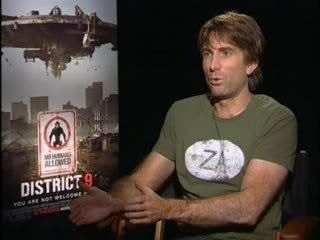
AVC: So do you know what the immediate next step is in your life?Copley speaks to the psychology of acting; him changing fields in his life matched how he was forced to "strip away" what he had been holding on to as defining himself.
SC: No. It’s the first time in my life… Before, if you’d asked me that, there was always a definite master plan and sub-plan and plan linking into that plan. So I’m just really trying to live differently for a bit. It’s a very different world. The acting world is a humbling experience, I find. It very much, for me, it shut me up. This whole thing. It was like, “Well, you think you can be a hotshot because you started this company and you started a television channel when you were 24, or whatever.” And it’s really… [Pauses.] The process of finding a character—stripping everything off, all those things you have to protect yourself, that you think are your clever things, was in a sense mirrored in my work life. I let go to see what’s actually out there, or what I’m meant to really do, if there is such a thing. And certainly this experience leads me to feel like maybe it is."
----------------------------
2. Excerpt from interview with Peter Capaldi, regarding his character (Malcolm) from the BBC Show The Thick of It and now the film In The Loop:

AVC: On The Thick Of It, Malcolm is a fire-breathing Scot in a world of posh Englishmen whom he can generally run right over, but the Americans in In The Loop give back as good as they get. How did it change things to have Malcolm taking on enemies in his weight class?Peter's intuition of what's "more interesting, and funnier for the audience" falls in line Keith Johnstone's framing of the concept of Status for performers. (The goal of the exploration of this being keeping an audience interested.)
PC: I think for me, that was a wonderful thing. Malcolm is largely the top dog on the TV show in terms of power. So to have people who were superior to him, and cleverer than him, and darker, was great, because then it gives you somewhere to go. So for me, that was a good development. I’d be happy to see more of that. It makes it more interesting. There’s only so long that you can go on screaming and shouting and swearing. There’s a sense of diminishing returns about that. But if you actually have to engage with somebody who’s superior to you and actually battle with them, struggle with them, I think it’s more interesting, and funnier for the audience."
Snipped from a summary of Impro's chapter on Status:
As Peter says, Malcolm's character is generally higher status than the others on the TV show. To have him engaging those equal or near equivalent to his status in the film can be more interesting.
"When played in this way, conflict transpires on an almost invisible plane which the audience will unconsciously pick up: the most mundane gestures and casual behaviors -- where to sit, who speaks first, what the choice for dinner will be, etc. -- become sites of struggle in virtually imperceptible ways. Every sound and posture implies a status, and recognizing this leads to a change in one's worldview.
A great deal of the comedy or tension [is derived] from the tiny ways that people vie for power by trying to raise their own status or lower the status of others in an implicit rather than explicit way."
----------------------------
3. Excerpt from interview of Ken Jeong, comedian/actor (from Knocked Up, The Hangover, The Goods), regarding upping the quality of the comedy work being put on film (and what he's learning from working with some "pros"):
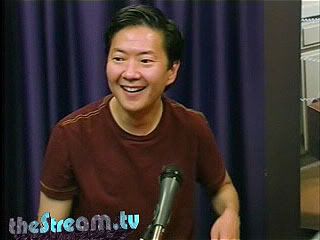
"Keeping it grounded" helps signal to the audience that whatever happened, just happened in the real world - the reaction shots help put to the screen the incredulity the audience is feeling at that moment. The reaction shot can be a tension releaser as well - letting the audience can enjoy the previous moment through the reaction shot.
AVC: What kind of subtle moves?
KJ: Just reaction glances. Both of those guys [Paul Rudd, Jeremy Piven], I think alot of comedic actors, on their close-up they can deliver. But when it comes to reacting to other people being funny, that’s work in itself. I hate to sound so Comedy Theory 101—I know it’s sounding really boring—but for me, Rudd in Role Models, when he reacts to things that Seann William Scott does, he does certain things that help stretch the scene a little more, and it makes Seann look better. I felt like Piven would do the same thing. He would make all of us look better by his reactions. It’s a very subtle thing, but when the movie comes for a close-up, and they show that quick shot, it makes it funnier. Because we’re trying to dunk and do fancy moves to the basket, but what you really need is a point guard who can direct the flow. I really realize the more movies I do just how important—it’s so cliché when people say it, because everybody says it nowadays—but it’s so important to keep it grounded. I totally understand what that means.
--
Thanks to A.V. Club for these thorough interviews! Picture sources here, here, and here
Subscribe to:
Posts (Atom)
